| Around 10% of the world's total fish species can be found just within the Great Barrier Reef. |
|
|
|
| The toxin in puffer fish is 1200 times deadlier than cyanide. |
|
|
|
| Strange fish facts |
| Many Fish can taste without even opening their mouths. |
|
|
| Fish Facts |
| Most brands of lipstick contain fish scales |
|
|
| Did you know? |
| American Lobsters have longer life spans than both cats and dogs, living over 20 years. |
|
|
| When you need a good reason to go fishing! |
| Going fishing outdoors increases your vitamin D, which helps regulate the amount of calcium and phosphate in your body, keeping your bones and teeth healthy. It boosts your immune system and has been linked to fighting depression. |
|
|
| Some fishes lay their eggs on land instead of in the water |
| The mudskipper even takes this further, even mating on land. These fish burrow and lay their eggs in mudflats before returning to the water. |
|
|
| In three decades, the world's oceans will contain more discarded plastic than fish when measured by weight, researchers say. |
| |
|
|
| As of 2020, there were 34,000 known fish species around world. That’s more than the number of species in all other vertebrates: birds, reptiles, mammals, and amphibians combined. |
|
|
|
| God Bless The Troops |
| We sleep safely in our beds because rough men stand ready in the night to visit violence on those who would do us harm. - George Orwell |
|
|
| One fish is called a fish. Two or more are still called fish. |
| However than one species of fish are called fishes. |
|
|
| Did you know that |
About 60% of US Anglers practice catch and release.
Women make up about 33% of fresh water anglers and
about 85% of fresh water anglers begin fishing at 12 years old. |
|
|
| Just how man species of fish are there? |
| As of 2020, there were 34,000 known fish species around world. That’s more than the number of species in all other vertebrates: birds, reptiles, mammals, and amphibians combined. |
|
|
| Even Catfish are finicky |
| Taste Buds ? Catfish have a more refined sense of flavor than humans. Our 10,000 taste buds may seem like a lot, but catfish can have as many as 175,000. This helps them find the exact location of their next meal. |
|
|
|
|
|
 |
|
Feb 22, 2018; 03:57AM
|
|
Category: Guide Services
|
|
Name for Contacts: Costa Rica Fads
|
|
Phone: 1-800-388-9957
|
|
City: Quepos
|
|
State: Puntarenas
|
|
Country: Costa Rica
|
| Description: |
Costa Rica Fads is one of the top
charters for offshore & FAD fishing
in Quepos, Costa Rica. Costa Rica
FAD Fishing offers some of the best
fishing in the World.
|
|
|

|
|
|
Nov 2002 Best Photo
$50 worth of fishing equipment for the photo with the most votes by November 30 th, 2002
|
Debbie Dardeen38 lbsStriped Bass |

Click the image for full story |
| Debbie Dardeen, 34 |
|---|
| Story: Chunking bunker produced this nice size stripper on a cold
... |
|
43 vote(s)
|
|
|
 |
|
Nov 12, 2004; 09:52AM - ATTRACT FISH (ΜΕΛΑΝΟΥΡΙ-ΣΑΡΓΟ&
|
|
Category: Fishing tips and tricks
|
|
Author Name: C.E.GIONIS
|
Tip&Trick Description 1:
TO ATTRACT FISH WHILE YOU INTEND TO USE A WHIP WITH RIG FOR SPARIDAES FAMILY YOU CAN USE THE FOLLOWING:
PUT ABOYT 1 KGR (KILO) OF ANY FISH (FRESH OF NOT IT IS THA SAME)IN A BOX WITH HERMETIC LID. LEAVE IT FOR 1 WEEK TO HAVE THEM ROT. OPEN AND ADD SAND ABOUT DOUBLE THE VOLUME OF FISH USED.MIX VERY WELL AND USE A SPOON TO THROW IT SLOWLY SLOWLY EVERY 5 MINUTES IN THE WATERS
(LIITLE AND OFTEN)
START FISHING USING YR WHIP EQUIPPED WITH MOTHER LINE N18, 2 HOOK LINES N15-16 WITH LENGTHS 55-60 CM AND VERY SMALL LEAD AND FLOATER.
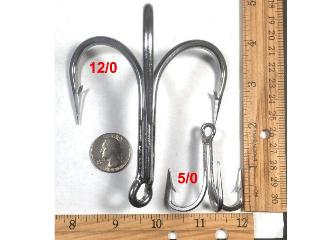
USE 2 TREBLE HOOKS N16 FOR EVERY HOOKLINE.
GREAT SUCCESS WITH THIS METHOD IN GREECE.
BEST REGARDS
COSTAS |
|
|
|
|
|
|
 |
|
Dec 9, 2007; 09:35PM - Custom Fit Boat Cover
|
|
Category: [other]
|
|
Price: Varies
|
|
Name for Contacts: Elite Outdoors
|
|
Phone:
|
|
City:
|
|
State: MO
|
|
Country: USA
|
 Description 1:
When only the best will do! A perfect fit: measured, tucked, darted and approved by Hurricane's own pattern and design craftsman. Vulnerable wear and stress points are double reinforced with an extra tough material sewn to the underside of the cover. An unbreakable 1/4' poly draw rope sewn with the perimeter hem enables the cover to be cinched tight to the hull. 1' poly loops are sewn around the perimeter of the cover to accept a Hurricane strap/buckle tie down kit, bungee cords, or rope ties for positive securing to the boat. Built tough to take the exposure and abuse that boat covers are exposed to when trailering, storing, or mooring.
Description 1:
When only the best will do! A perfect fit: measured, tucked, darted and approved by Hurricane's own pattern and design craftsman. Vulnerable wear and stress points are double reinforced with an extra tough material sewn to the underside of the cover. An unbreakable 1/4' poly draw rope sewn with the perimeter hem enables the cover to be cinched tight to the hull. 1' poly loops are sewn around the perimeter of the cover to accept a Hurricane strap/buckle tie down kit, bungee cords, or rope ties for positive securing to the boat. Built tough to take the exposure and abuse that boat covers are exposed to when trailering, storing, or mooring.
Westland has over 16,000 Exact Fit Custom Cover patterns for over 200 different boat manufacturers. You will have your choice of 3 fabrics and over 30 colors.
To check to see if we have a custom cover pattern for your boat please Email Us your year - make - model - any accessories like towers, swim platforms, bow rails, radar archs, etc. |
|
 Description 2:
Sharkskin color chart...also, available in Sunbrella
Description 2:
Sharkskin color chart...also, available in Sunbrella |
|
|
|
|
 |
|
Jul 14, 2003; 11:27AM - 'Fly Hooker Daily Report
|
|
Category: Mexico Cabo San Lucas
|
|
Author Name: George Landrum
|
“FLY HOOKER” WEEKLY FISH COUNT
Striped Marlin: One tagged and released (#120)
“FLY HOOKER” FISH REPORT FOR JULY 10, 2003
I met Chuck and his son Manny yesterday as they were wandering the marina looking at the
boats. They had already talked with a friend of mine who had recommended the “Fly Hooker”
and Chuck decided to go fishing with his son today. Maybe it would have been better to wait
another day. There were a lot of fish hooked up by other boats today, but it was not the “Fly
Hooker’s” day for good luck. Juan said that they saw quite a few fish but were only able to toss
bait to two fish and neither one of the Marlin were hungry. They also tossed bait to some Dorado
they found under the Frigate birds and again, the fish would not eat. The boat came in with no
flags flying. Sorry guys, we wish things had been different.
“FLY HOOKER” FISH REPORT FOR JULY 13, 2003
Kevin Brown is fishing the “Fly Hooker” again this year and he has two friends with him. Juan
and his brother went to the Pacific side of the Cape this morning and worked the area off of the
lighthouse. They saw quite a few Marlin on the surface but could not get any of them to bite.
They worked their way around the Cape when the wind started to blow at noon and finally at 1
P.M. found a hungry fish. Both Kevin and Juan said that all of a sudden the bite turned on and
boats all over the place were hooking up. Definitely a tide thing, as this was the day of the full
moon. The fish was fought for around 30 minutes, on live bait and 40# line, before it was brought
to the side of the boat, tagged and released. Good gong guys, sure wish you had a little more
time and could get some more fishing in.
“FLY HOOKER” REPORT FOR 14 JULY, 2002
Today was boatwork day and we got the deck painted, the wood oiled and the fighting chairs
re-upholstered. She is looking good now!
|
|
|
|